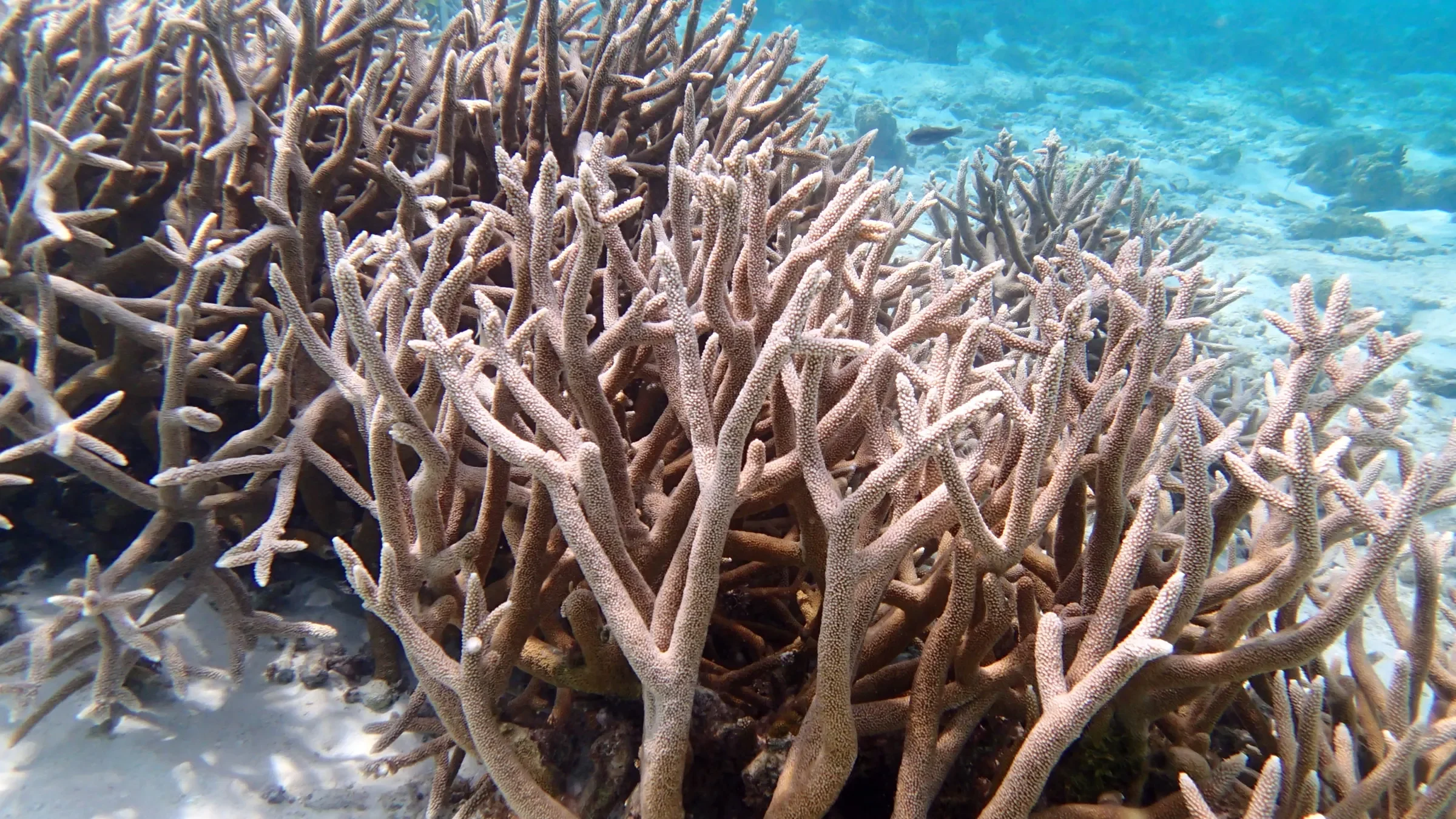
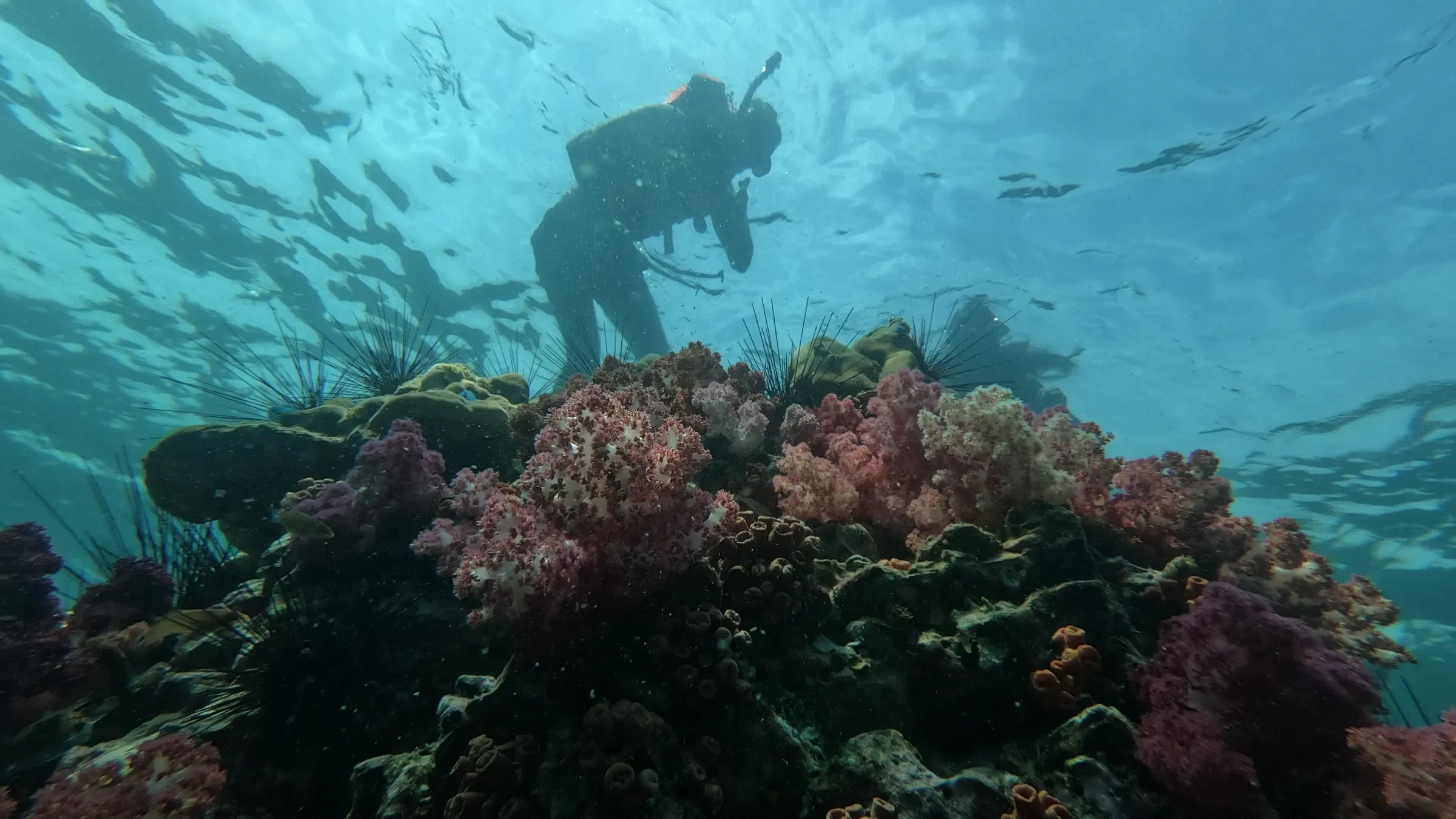
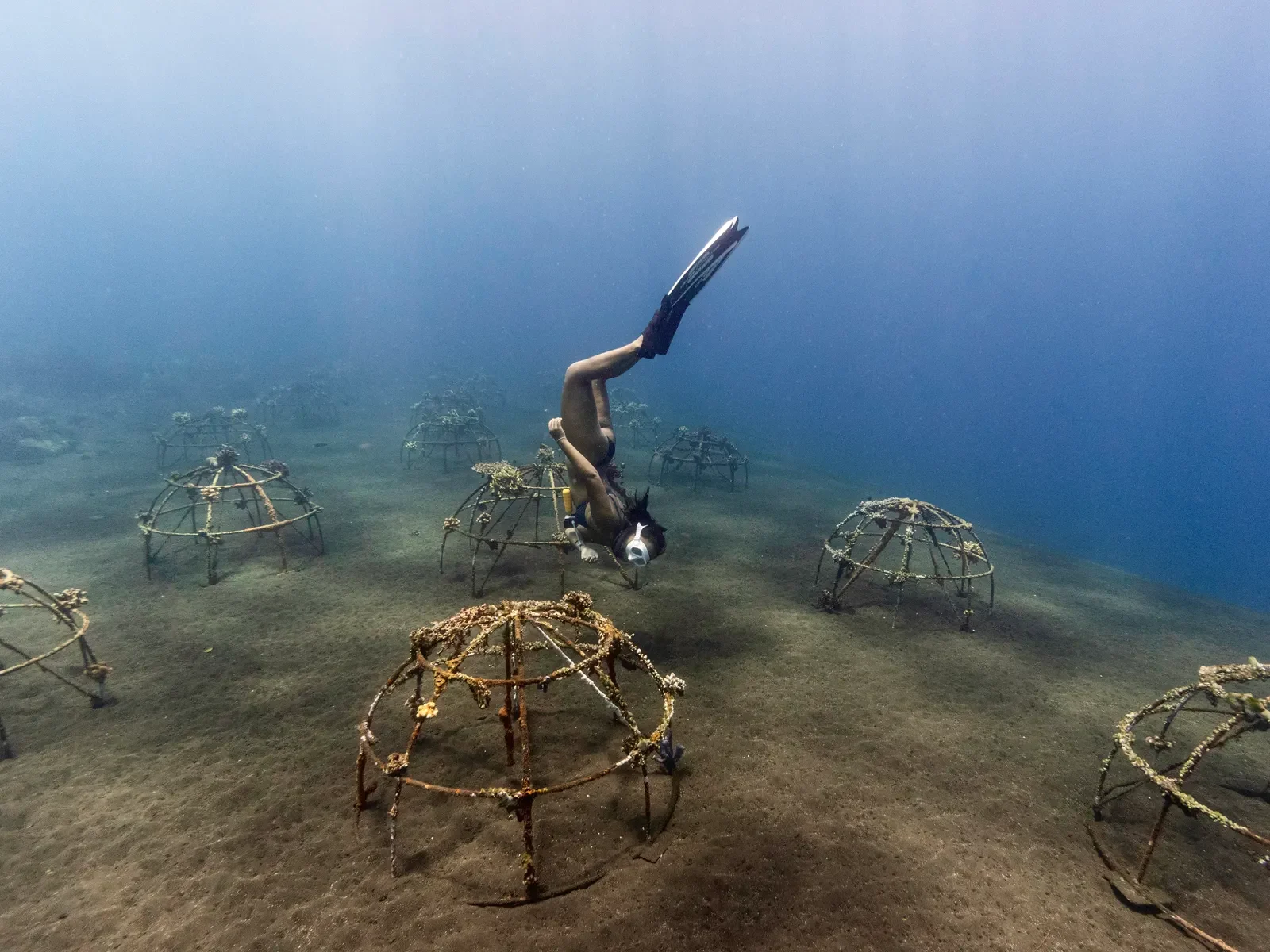
A coral fragment starts with a simple gesture: taking a small piece from a healthy colony. That piece, the size of a finger, is attached to a nursery frame a few metres below the surface, where the water is clear and the current steady.
The first weeks
In the first weeks, the fragment heals and takes hold. It is the most fragile period. The team dives to clean the frames, remove algae and check that every fragment is secure. Each visit adds a photo and a note to the fragment's page.
Growing in the nursery
Once settled, the fragment grows slowly, branch after branch. We measure it on every monitoring dive, always the same way, so the numbers compare from one season to the next. Sponsors see those measurements land on their coral's page, with the photo of the day.
Planting
When the fragment is strong enough, it leaves the nursery for the reef. We choose the site with care: depth, light, the condition of the corals nearby. The site then appears on the map, and the page follows the fragment to its new address.
What we do not promise
Not every fragment survives. We show it, site by site, without rounding. An honest gift deserves honest information, and that transparency is what makes people want to keep going.